A Garden Update

A Garden Update

It’s been 6 weeks since my kids and I planted our seeds. We’ve faithfully watered them everyday and have seen our rows of dirt turn into buds of lime green.

There have been a few casualties. On a particularly hot day, I didn’t water enough and the green beans wilted in our little greenhouse. I hoped they would return but they didn’t. Unfortunately, those were the only two (of 12) green been seeds that sprouted.

garden 2 (1 of 1)

Our cucumbers and tomatoes are about six inches tall but the peppers haven’t sprouted yet. They usually take 4-6 weeks to sprout so now that they haven’t, I’m wondering if they have gotten enough warmth. I’m going to put a plastic bag around the egg cartons to keep them a little warmer and hope that forces the sprouting.

I thought I may have planted the seeds a little late this year but it’s about 40 degrees here today and snowing 10 miles from here.  Since we are not past the first frost yet, I think we’re going to be right on track.

What is growing in your garden this year?
 

How to Wash Produce {easy, effective, cheap}

how to wash produce {easy

I’ve gone more years not washing produce than I would like to admit. I got lazy.

Then I found an easy method to get it done that works for me. It’s not genius, it’s quite the opposite. But it works and that’s what counts, right?

I shop for produce once a week. Once I’m done unpacking the groceries, I clean all produce immediately. Then I cut it up to make snacking easy.

Do Produce Rinses Work?

Next time you are tempted to buy produce rinses (I’ve got a few bottles myself), save yourself the money and buy a gallon of white vinegar. Cooks Illustrated did a test of various produce cleaning solutions and found that white vinegar removed 98% of the bacteria.

Researchers at the Institute of Agricultural and Environmental Sciences at Tennessee State University tested dilute vinegar against plain water and a commercial product called Veggie Wash that they purchased at a grocery store. “We really did not really find the veggie washes effective or necessary.”

How to Wash Produce {easy, effective, cheap}

How to Wash Produce with Vinegar

1.  Fill up a bowl with 24 ounces of water, depending on the amount of produce.

2. Add the 8 ounces of white vinegar and stir. (3 to 1 ratio of water to vinegar)

3. Add the produce to the mixture.

4. Let sit for a couple minutes.

5. Rinse.

6. Cut off stems and blossoms as bacteria can get trapped in them.

Do you wash your produce, how do you do it?
 

2013 Safer Sunscreen Guide

2013 Safer Sunscreen Guide

The Environmental Working Group released their annual sunscreen guide. The Safer Sunscreen Guide lists the beach and sports sunscreens, SPF moisturizers, lip balms and makeup that they consider to be the safest compared to other sunscreens.

In addition to the chemicals EWG screens for, they recommend skipping high-SPF products and to avoid vitamin A.

Skip High-SPF Products

  • The difference in protection in negligible. For example, SPF 50 protects against 98% of sunburn rays and SPF 100 protects against 99%.
  • Users of high SPF products tend to think that they are more protected and stay out in the sun longer and are overexposed.
  • High SPF products have a higher concentration of sun-filtering chemicals and may pose a health risk.

Avoid Vitamin A

Retinyl palmitate or retinol, a form of vitamin A, may speed the development of skin tumors and lesions when on the skin in the sun. Unfortunately, over 20% of the sunscreens and makeup products with SPF also have Vitamin A.

my favorite SAFER sunscreens

My Favorite Sunscreens

The EWG found 184 beach and sport sunscreens met their criteria.

I was surprised to see 4 products from Coppertone although all of them contained Oxtinoxate, the most popular chemical used in sunscreens. It’s ranked a 6 (10 being the most toxic) and it’s noted: Estrogenic effects are noted in laboratory animals as well as disruption of thyroid hormone and brain signaling. Personally, I wouldn’t purchase a sunscreen with this chemical.

I prefer sunscreens with titanium dioxide or zinc oxide (both rated a 2) or a mixture of the two. We’ve been using Badger sunscreen for years, I find it to provide great protection and be cost effective. I also keep California Baby on hand, it’s easy to find locally at Target or Whole Foods.

That being said, there are others that have spent way more time and effort reviewing sunscreens and have come to different conclusions than the EWG on the safest sunscreens. Check out SafeMama’s Guide to Sunscreens – she happens to love Badger, too!

Is Sunscreen a Necessity?

In the future, I’ll be talking about whether or not we will be using sunscreen at all. There are a lot of people in the natural living community who no longer do.

tip iconWant to have the list handy while shopping? Download the FREE EWG Sunscreen Guide to your iPhone. Or if you donate $5, they will send you a wallet guide.

Do you use sunscreen, what is your favorite?
 

Weekend Inspiration

you can't always wait for the perfect time

{source}

Homemade Condiments for the Summer from Keeper of the Home :: A great way to avoid high fructose corn syrup and other junk in the store bought versions. Recipes for ketchup, mustard, relish and BBQ sauce.

Our Story from Assortment Blog :: A family of 5 living in a beautiful 665 foot cabin while they save money to build a house. A great story about simple, intentional, purposeful living.

Homemade Beeswax Candles from A Beautiful Mess :: I’ve wanted to make beeswax candles forever. Definitely doing this!

What Does a Real Foodie Buy at Costco? from Kitchen Stewardship :: This is a great series for several different grocery stores. I don’t have a Costco membership but this has me rethinking it.

 20 Things to Do with Your Dehydrator at Health, Home and Happiness :: A dehydrator is on my wish list.  Butternut squash chips, jerky, fruit leathers. Yum.

the natural living mom network on pinterest

Are you following The Natural Living Mom Network over on Pinterest yet? It’s a great way to follow 20 moms with a focus on living naturally, creating with our hands, caring for creation and parenting with creativity.


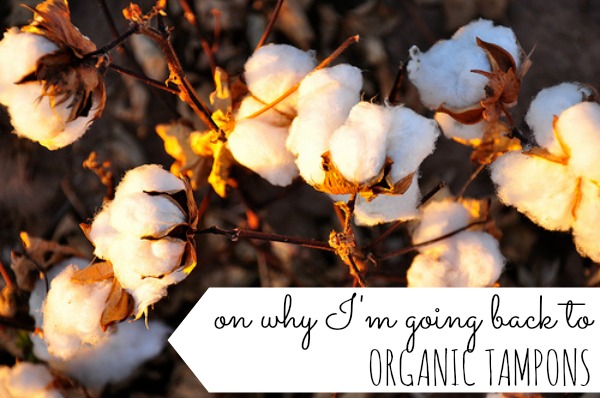
On Why I’m Going Back to Organic Cotton Tampons

on why I'm going back to organic tampons

When I quit working outside our home three years ago, I had to cut expenses. My personal care products was one of those areas and I’ve been using conventional tampons ever since.

I had forgotten that conventional tampons are bleached with chlorine dioxide. The process is technically “chlorine-free” but it releases dioxin into the environment. Dioxin has been shown to cause cancer. I’m doing whatever I can to stand up to cancer.

Conventional tampons are made with a blend of cotton and rayon. 94% of the cotton grown in the United States is genetically modified (GM). I do my best to keep GM food out of our family’s bodies, somehow I forgot that tampons go in my body, too.

Additionally, more than 10% of the world’s pesticides are used on conventional cotton. It’s hard to believe none of the pesticide residue goes into a tampon.

Tampons typically contain odor neutralizers and fragrances. We know that synthetic fragrance is made with chemicals such as phthalates, linked to hormone disruption and neurotoxins, chemicals that are toxic to the brain.

Sanitary Pads aren’t any Better

The FDA considers sanitary pads to be “medical devices” and therefore, doesn’t require them to have their ingredients listed. They are primarily made from plastic, cotton and wood pulp. Some contain latex, a problem for those with a latex allergy. One sanitary pad is the equivalent of using four plastic bags.

Check out this video from Naturally Savvy to see her light two pads on fire: a conventional pad and an 100% organic pad. The difference is incredible!

Alternatives to Conventional Pads and Tampons

I’m going back to organic cotton tampons. They are made with 100% organic cotton and toxic pesticides are not allowed in organic agriculture. They are bleached with hydrogen peroxide so there is no dioxin released into the environment.

In the past, I’ve used the Natracare, Seventh Generation and Trader Joe’s organic cotton tampons and have been really happy with them.

Reusable cotton pads such as Glad Rags are an option or you can get out your sewing machine and make them yourself. This is one of the most environmentally friendly and affordable options.

The Diva Cup gets amazing reviews and I’ve been considering getting one for awhile. It’s about $25 and tampons are $4. Doing the math, it takes just 6 boxes of tampons to pay for the Diva Cup. It’s a no-brainer for saving money.

Anyone use the Diva Cup? I would love to hear your thoughts on it!