Alternatives to BPA in Canned Foods
February 23, 2010
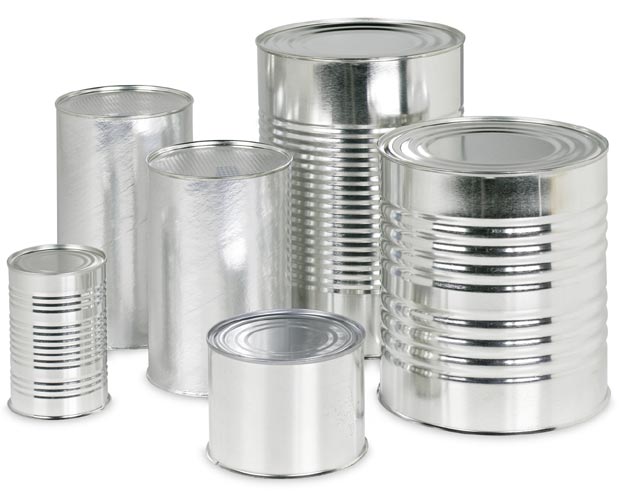
It’s not new news that the tin cans used for canned food is lined with a resin containing bisphenol-A (BPA). The only new news is that every week there seems to be new research warning of BPA’s dangerous effects. Unfortunately, avoiding canned food altogether is just not feasible for every family. There are ways, however, to minimize your use of canned foods and the effect that BPA may have on you and your family.
1. Buy tomato based products in glass or TetraPaks. Acidity causes BPA leaching and tomatoes have a lot of it. You can get glass tomato paste and strained tomatoes from Bionaturae and crushed and diced tomatoes from San Marzano. Trader Joe’s carries an Italian Tomato Starter Sauce in a TetraPak and Pomihas both chopped and strained tomatoes, along with a marinara sauce in TetraPaks.
2. Buy Eden Foods canned goods. According to their website, “All 33 Eden Organic Beans including Chili, Rice & Beans, Refried, and Flavored, are cooked in steel cans coated with a baked on oleoresinous c-enamel that does not contain the endocrine disrupter chemical, bisphenol-A (BPA). Oleoresin is a non-toxic mixture of an oil and a resin extracted from various plants, such as pine or balsam fir. These cans cost 14% more than the industry standard cans that do contain BPA. The Ball Corporation tells us that Eden is the only U.S. food maker to date to use these BPA free cans and we have been since April 1999.” Buy online and get 15% off with the coupon code ‘OCA’.
3. Buy dried goods and cook them. Searching through my pantry, I find that many of my canned food purchases are beans – kidney, white, garbanzo or black. I can buy dried beans and cook them for my meals, it takes about an hour in a saucepan or just minutes with a pressure cooker.
4. Grow or pick your own. Spring is around the corner so start thinking about planting a fruit and/or veggie garden. I promise it’s not a lot of work – start small with a few easy to grow veggies this summer and keep adding year after year. It feels good to walk outside each day and pick the fruit of your labor (literally). What you don’t eat can be canned (in glass) for the winter. If you don’t want to grow your own, go to a farm and pick them. Last summer, we picked over 30 pounds of blueberries that lasted all winter and enough strawberries to make freezer jam for a year.
5. Buy soups and broths in TetraPaks. You can find a great variety of soups and broths in TetraPaks from brands like Pacific Foods, Imagine Foods, and Trader Joe’s.
6. Buy frozen. Frozen may not be quite as good as fresh, but it’s a better choice than canned. Frozen, organic fruits and veggies are not that more expensive than conventional choices and they are much healthier and contain less pesticides.
What other kinds of canned foods do you buy and can you find an alternative?
Glass Baby Bottles
January 20, 2010
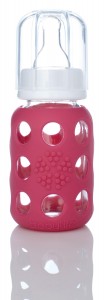
Three plus years ago, when my daughter was born, bisphenol-A (BPA) didn’t have quite the notoriety it does now. I used plastic bottles then and you can bet they had BPA in them. Flash forward several years and BPA has been removed from most plastic bottles. In addition, many of the bottle manufacturers have come out with glass bottles.
In the last year, we switched from using plastic to using glass in as many areas as we can and bottles was one of them. I was a little wary of using glass for the baby bottles, but for the last 8 weeks, we’ve used them with great success. One of the best things about using glass is that I feel safe warming the milk or water in the bottle directly as I don’t put any plastic in the microwave.
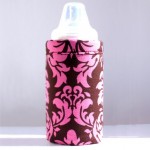
You don’t have to worry about breakage – I dropped a bottle on my hard wood floors and it practically bounced. No breaking, no cracks. Once our son can hold the bottle himself, I will use a “bottle cozy”, a cover for the bottle that will be just one more layer of protection against breakage. I have a silicon bottle “cozy” but you can find other bottle covers like this pink damask cloth cover from CoozyCo’s etsy shop or if you’re crafty, you can crochet bottle covers.
BPA in canning lids
October 21, 2009
The BPA saga continues…..
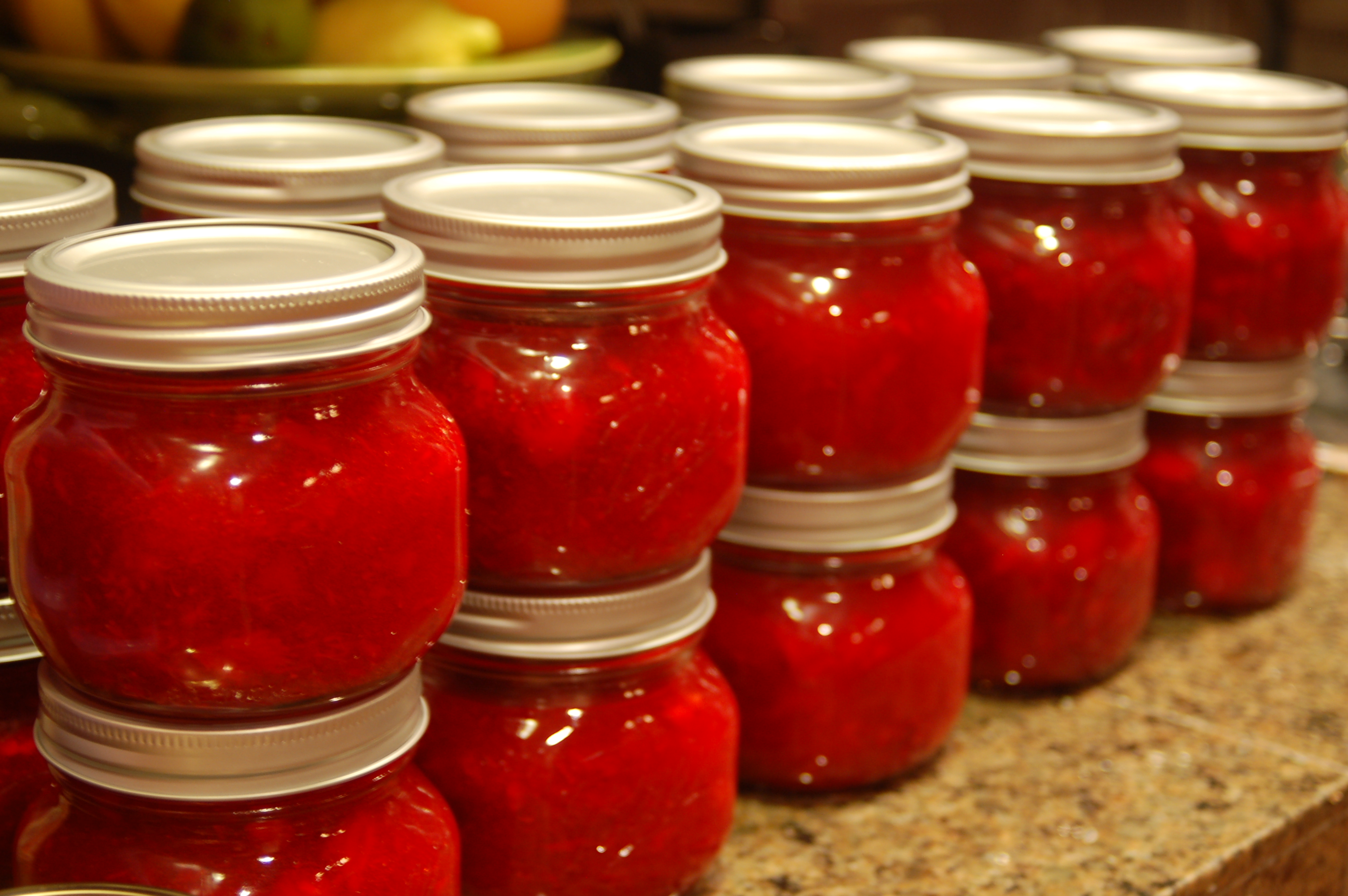
Do you can? I make strawberry jam every summer – that is the extent of my canning expertise. Unfortunately, I just found out that my favorite Ball canning jars have BPA in the lid.
Jarden Home Brands is the manufacturer of many of the most popular home canning products : Ball, Kerr, Golden Harvest, and Bernardin. On their website, they state “the coating on our home canning lids is designed to protect the metal from reacting with the food it contains. A small amount of Bisphenol A is present in the coating.”
However, the good news for those of you with the plastic canning containers and lids – they DO NOT contain BPA.
It figures that I would buy glass canning jars because overall, I think glass is safer than plastic and then the stinkin’ lids would have BPA! So disappointing – I have 50 Ball jam jars!
If you are interested in complaining to Jarden to encourage them to find a safer way to manufacture their canning lids – do it here!
You can purchase BPA FREE canning jars and lids from Weck Canning, a German company. This is the only alternative I have found. Let me know if you found anything else!
UPDATE: There are now more BPA free options for canning jar lids. Please see my updated list here.
BPA in Receipts
October 9, 2009

Will it ever end? BPA in being found in everything and Science News is now reporting it’s found in receipts, too! WHA??
According to Science News, John C. Warner, of the Warner Babcock Institute for Green Chemistry, learned about the chemistry behind some carbonless copy papers (now used for most credit card receipts) and the thermal imaging papers that are spit out by most modern cash registers. Both relied on bisphenol-A. Manufacturers would coat a powdery layer of this BPA onto one side of a piece of paper together with an invisible ink and once pressure or heat was applied, you would get color.
Mr. Warner tested receipts from as late as one month ago and continued to find BPA on them. The concern is that while parents have been freaking out about baby bottles leaching BPA – it’s only in nanogram quantities compared to the amount leaching from receipts – 60 to 100 milligrams. You touch the receipts, you touch your food, you ingest BPA. Another good reason to wash your hands before eating!
Like other products with BPA, it will probably phase out use over time but until then, just take the easy step of declining receipts when you don’t need them. Many stores and ATM machines will ask you if you want a receipt now but if they don’t, just tell them not to print one for you. Do you really need another piece of paper in your purse??
SIGG Bottles DO Leach BPA
September 3, 2009
In case you were holding onto your old SIGG bottle despite knowing that the liner contained BPA, you should definitely be replacing it now. A study in the U.S. found that the old SIGG bottles DO leach BPA in spite of the company’s claim that they did not.
While SIGG is not giving refunds, they are replacing the bottle with their new bottles containing their EcoCare liner. Unfortunately, we’re not sure what’s in their new liner either so might I suggest another option?
1. Contact some of your local SIGG retailers – many of them are offering refunds. My local natural foods store refunded mine, without a receipt, no questions asked.
2. Return the bottle to The Soft Landing’s “Big Bottle Swap”. Once you return the bottle, they will give you 30% a new bottle – choose from participating brands including, CamelBak, Crocodile Creek, Green Sprouts, Kid Basix, Klean Kanteen, Nathan, Thermos and Thinksport.
Current Environmental Health News
July 8, 2009
There are often so many interesting reports and findings in the environmental health world that I’m unable to read and review them all so I’ve included several recent articles here that you can look into further if it peaks your interest – click on the headline for the entire article.
Weed killer kills human cells. Used in yards, farms and parks throughout the world, Roundup has long been a top-selling weed killer. But now researchers have found that one of Roundup’s inert ingredients can kill human cells, particularly embryonic, placental and umbilical cord cells.
Food packaging leaks BPA, phthalates. At least 50 chemicals capable of interfering with hormones is permitted in packaging in the United States and the European Union, a recent study says.
More preemies born in neighborhoods with heavy pollution from cars, trucks. Women exposed to air pollution from freeways and congested roads are much more likely to give birth to premature babies and suffer from preeclampsia, according to a study by California scientists published Wednesday. The findings, based on births in the Long Beach/Orange County region, add to the growing evidence that car and truck exhaust can jeopardize the health of babies while they are in the womb.
Rep.Israel bill wants cleanser ingredients listed. Household cleaners would have to carry labels with a full list of their ingredients – including potentially harmful chemicals like hydrochloric acid – under proposed federal legislation that would revamp what manufacturers must disclose on such everyday products
Lipstick makers urged to remove lead from cosmetics. Your lipstick is shocking red, but does it contain a shockingly unsafe amount of lead? Lead is often present in the pigment of the reddest lipsticks. But there are no FDA standards limiting lead and other toxins in lipstick.
New Study from Harvard on BPA
May 28, 2009
If you haven’t dumped those old bottles you have laying around, now might be the time to consider it. A study released from the Harvard School of Public Health found that participants who drank from polycarbonate bottles and baby bottles for ONE week showed a two-thirds increase (69%) in their urine of the chemical bisphenol A (BPA). If these participants were only drinking from these bottles for one week, can you imagine what your baby is ingesting by using bottles for a year?
Additionally, the participants only drank cold liquids from the bottles. “We found that drinking cold liquids from polycarbonate bottles for just one week increased urinary BPA levels by more than two-thirds. If you heat those bottles, as is the case with baby bottles, we would expect the levels to be considerably higher. This would be of concern since infants may be particularly susceptible to BPA’s endocrine-disrupting potential,” said Karin B. Michels, associate professor of epidemiology at HSPH and Harvard Medical School and senior author of the study.
Exposure to BPA has been shown to interfere with reproductive development in animals and has been linked with cardiovascular disease and diabetes in humans. Numerous studies have shown that it acts as an endocrine-disruptor in animals, including early onset of sexual maturation, altered development and tissue organization of the mammary gland and decreased sperm production in offspring. It may be most harmful in the stages of early development.
Bottom line – if you’re not positive that your bottles are BPA free, get new ones!
Pottery Barn Kids and Bisphenol A (BPA)
May 4, 2009
I am a big huge fan of Pottery Barn Kids (PBK) style. They create “needs” for me I didn’t even know I had
A couple months ago, I was perusing their newest line of feeding products and noticed that a few of them were labeled ‘BPA free’. What worried me was that some of the products were NOT labeled ‘BPA free’, leading me to believe that they might contain the chemical. With a little research on the PBK site, I found a Bisphenol A Statement.
Unfortunately, the Bisphenol A Statement, did little to calm my fears as it stated that PBK consider BPA safe and listed several products that contained BPA ( many that I had seen in the store ). I contacted Pottery Barn Kids and after several emails between myself and the Public Relations Manager, I was told that the statement is outdated and the products listed have been discontinued.
In response to my request to receive a list of all current products containing BPA, the statement I received was “Pottery Barn Kids has voluntarily taken proactive steps to remove BPAs from all food-related, mouthable products including plates, cups and food storage containers. Additionally, Pottery Barn Kids is 100% compliant with recent mandates regarding lead and the six banned Phthalates. Pottery Barn Kids is committed to offering product collections that are non-toxic and environmentally safe for kids.”
While I’m not 100% confident that none of the Pottery Barn Kids current products contain BPA, I agree that they do seem committed to offering more non-toxic and environmentally friendly options for kids. They’ve recently come out with an Eco-Glider (using SFI-certified hardwood, recycled steel and soy-based foam) and they have a number of bedding collections that are 100% organic cotton and Oeko-Tex certified. Their Amy Romantic Floral collection may just grace my daughter’s first ‘big girl bed’.
No matter what company you purchase products from, particularly with any food related product or one that may go in your kid’s mouths, I suggest confirming it’s safety before purchase.
Bisphenol A ( BPA ) – An Update
April 13, 2009
NOTE: This posting is part of Green Mom’s Carnival, published this month at Fake Plastic Fish.
2008 was the year of Bisphenol A ( BPA ) – you couldn’t go one week without reading another article about BPA in baby bottles. BPA is a chemical linked to developmental, neurological and reproductive defects and is a particular concern in fetuses, infants and children. It’s known to leach under certain conditions, especially high temperatures. This year, the news has slowed down but the momentum to remove the chemical has not.
Late last year, major retailers including Babies ‘R Us, Target and CVS banned baby bottles with BPA from their stores. In March, 6 bottle manufacturers voluntarily banned BPA from their bottles including Avent, Disney First Years, Gerber, Dr. Brown, Playtex and Evenflow.
Unfortunately, baby bottles are not the only way that BPA is entering our bodies. Other products that contain BPA include linings of cans such as baby formula, soda and canned foods. Dental sealants and fillings are also receiving media attention. Last month, a group of scientists met in Germany to reassess BPA. The Milwaukie Wisconsin Journal Sentinel reviewed preliminary drafts of consensus statements derived from that meeting and two statements I found concerning included:
- Newborns have between three and 11 times more BPA in their system than adults.
- Although scientists know that people are exposed to BPA by ingesting it through food and drink, they also know that they must be exposed to the chemical by other means as well. The levels detected in people are too high to be the result of ingestion only.
Canada banned BPA in baby bottles last year but the U.S. and European Union declared the chemical safe. However, since then, counties and states in the U.S. have enacted laws banning BPA. The first law, declared by Suffolk County, New York, banned bisphenol A in baby bottles and other empty storage containers used by children aged 3 years and younger. The city of Chicago is considering a similar ban. Other states considering a bill in 2009:
- State of Illinois – HB2485
- State of Oregon – HB2367
- State of California – SB797
- State of Hawaii – HB796
- State of Maryland – HB15
- State of Massachusetts – HB259
- State of Michigan – HB4522
- State of Minnesota – HF326
- State of Washington – HB1180
We can expect to see more activity this year on the ban of bisphenol A in products not only for children but for adults as well. A bill has also been introduced to the Senate and U.S. House of Representatives banning BPA from all food and beverage containers, however I don’t think we can expect this to move forward much until fall or winter.
To avoid products with bisphenol A:
- check your bottles and sippy cups to make sure they are BPA free – this may involve contacting the manufacturer
- don’t use liquid formula – powdered formula is also in a BPA lined can but the risk is significantly lower than liquid formula
- don’t microwave plastic food containers – this is a rule I use generally, but specifically do not microwave those with a #7 label on the bottom
- limit canned foods and opt for those packaged in cardboard cartons instead of cans – a lot of soups come in this fashion
- replace sports bottles with stainless steel bottles – in the last year, several manufacturers have replaced their sports bottles with a BPA free version
- talk with your dentist before your children get sealants - consider the necessity and ask your dentist to help you find BPA free sealants
- support the campaign to pass the ‘Kid-Safe Chemicals Act‘ – an overhaul of our nation’s chemical law